
14 hr
Pamukkale & Hierapolis Full-Day Tour from Marmaris
Journey to Turkey's iconic white terraces, bathe in thermal springs, and explore ancient Roman ruins
Reserve

Hand-picked by our editors — only the best 5 experiences from 47 reviewed.
Verified partners for every tour, free cancellation where available, and instant confirmation on every booking.
14 hr
Journey to Turkey's iconic white terraces, bathe in thermal springs, and explore ancient Roman ruins
Reserve
13 hr
Journey through Roman history at UNESCO-protected Ephesus with guided tour, lunch, and free time in Selçuk
Reserve
10 hr
Full-day escape to thermal mud pools, ancient rock tombs, and protected turtle nesting grounds
ReservePrices from verified partners. Availability updates in real time at checkout. Free cancellation policies apply where shown.
The landmarks, rooms, and views travelers on this tour remember — all visible on a single visit.
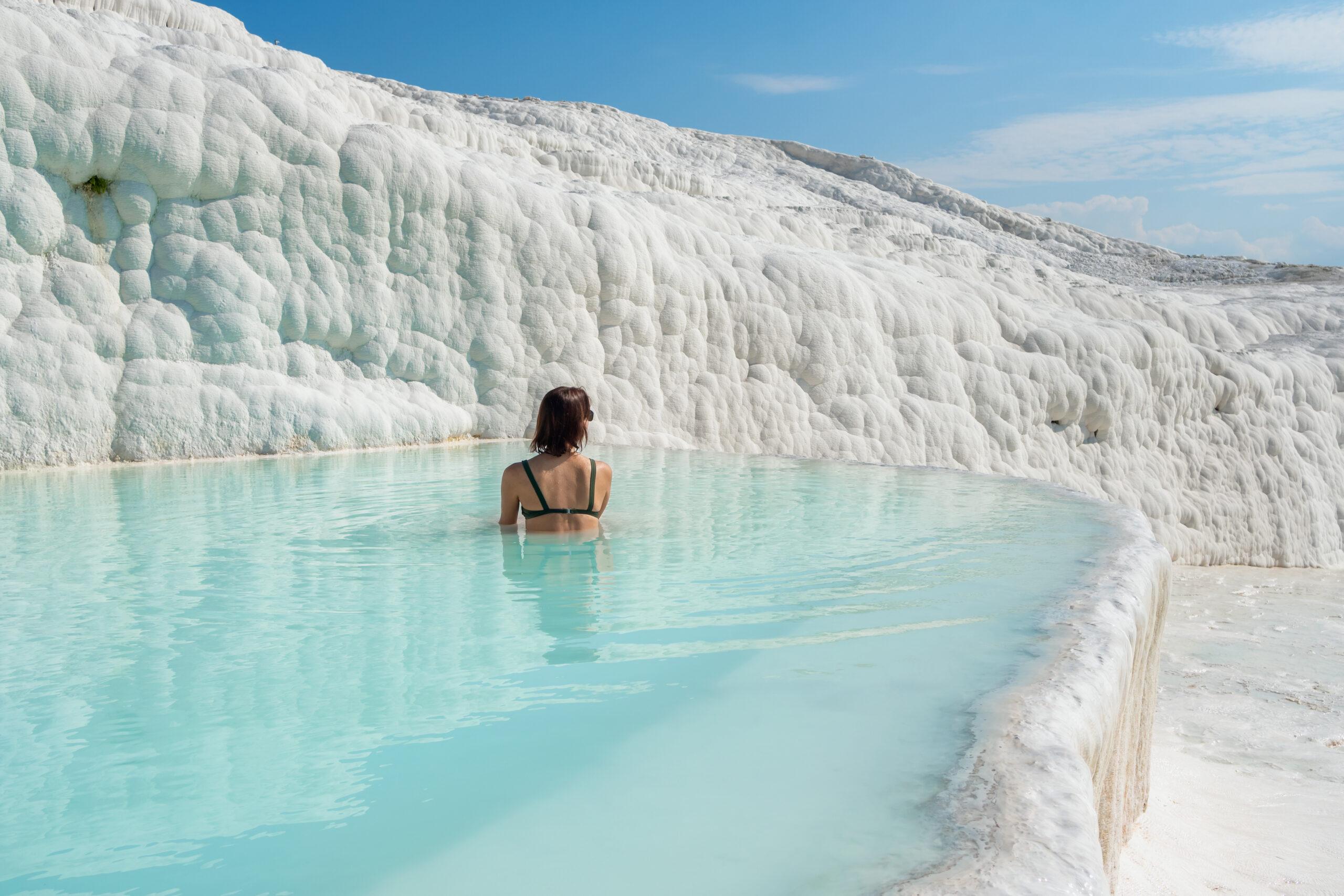
Terraced pools formed by carbonate minerals over thousands of years.
A massive Roman theater with 15,000 seats and intricate stone carvings.
Swim among submerged columns in naturally warm thermal water.
One of the largest ancient burial grounds in Anatolia with diverse tomb styles.
An octagonal complex built on the hill where the apostle was believed to be buried.
They complement each other; most visitors who do both call Ephesus the superior historical experience and Pamukkale the more visually distinct geological marvel.
| Feature | Top pick Pamukkale | Ephesus |
|---|---|---|
Primary draw |
Travertine terraces and thermal springs | |
Walking intensity |
Moderate - barefoot required on terraces | |
Terrain type |
Calcareous deposits and ancient stone | |
Climate conditions |
High exposure to solar radiation | |
Photo opportunities |
Contrast of white mineral pools and sky | |
| See tickets → |
Verdict: Choose the Pamukkale landscape if you prefer natural formations over the expansive urban ruins of the Ephesus Ancient City on your ephesus and pamukkale tour from marmaris tours.
Choose your ticket, select your date, and reserve in under two minutes. Secure checkout handled by our verified partner.
Instant confirmation by email, with a mobile voucher you can save offline. No printing, no queuing at a collection desk.
Arrive at the entrance, show your voucher on your phone, and walk in. Most tickets include priority or skip-the-line access.
Practical details for your visit straight from our verified partners — hours, access, rules, and how to get there.
Various
Pick-up for your ephesus and pamukkale tour from marmaris
Follow D585 or D320, parking is available at the North and South gates.
Most organized ephesus and pamukkale tour from marmaris options include door-to-door transit.
Modest clothing is recommended when visiting the Hierapolis ruins and religious sites. Ensure footwear is easy to remove as shoes are prohibited on the protected travertine terraces.
Standard backpacks are permitted, but may be subject to inspection at the main gate. Large luggage should be left in your transport vehicle during your ephesus and pamukkale tour from marmaris.
Handheld photography is permitted throughout the site for personal use. Professional equipment requiring tripods requires prior authorization from site management.
The natural travertine paths are uneven, steep, and slippery. Wheelchair access is restricted primarily to the paved areas of the Hierapolis ruins.
Mobile phone use is permitted, but please be respectful of other visitors. Signal strength can vary in deep valley sections of the historical zone.
Children are welcome, though strollers are impractical on the uneven limestone terraces. Maintain supervision near the water edges at all times.
Cafes are located near the Antique Pool and the museum. Carrying reusable water bottles is advised, especially during a full-day ephesus and pamukkale tour from marmaris.
Pets are not permitted inside the archaeological park or the travertine area. Service animals must be documented and kept on a leash at all times.
The 30 EUR entrance fee is included in the cost of most organized excursions. Keep your ticket accessible throughout the day for entry to different site zones.
Best time to go, insider tips, nearby landmarks, and the cancellation fine print — flip through to skim what matters to you.
How crowds, weather, and events shift across the year.
Mild temperatures, comfortable for walking the ruins.
Hot, arrive by 08:00 to avoid mid-day heat.
Pleasant weather, ideal for photography of the white slopes.
Cooler, but fewer crowds and thinner lines at the entrance.
Small details that turn a good visit into a great one.
Reach the site during the 08:00–10:00 window to miss tour buses.
Bring sandals for the travertine section, but keep sturdy walking shoes for the ruins.
The white limestone reflects sunlight strongly, so use high-factor sunscreen.
Stay hydrated, as the heat increases significantly after midday.
The 30 EUR combined ticket allows access to both the travertine area and Hierapolis ruins.
The best morning light hits the white terraces perfectly for landscape shots.
Non-bookable sights within a short walk — free to visit, easy to pair.
Sunken columns in thermal waters.
Well-preserved Roman architectural site.
Artifacts recovered from the local excavations.
Octagonal memorial dedicated to the apostle.
Flexible, no hidden fees.
Full refunds are available for cancellations made at least 24 hours before the scheduled departure. Tickets include the 30 EUR combined entry fee for the travertines and Hierapolis ruins.
Hand-picked options within walking distance — pick a district for vibe, or a specific hotel for convenience.
Various guesthouses within walking distance.
Modern hotels with high-end amenities.
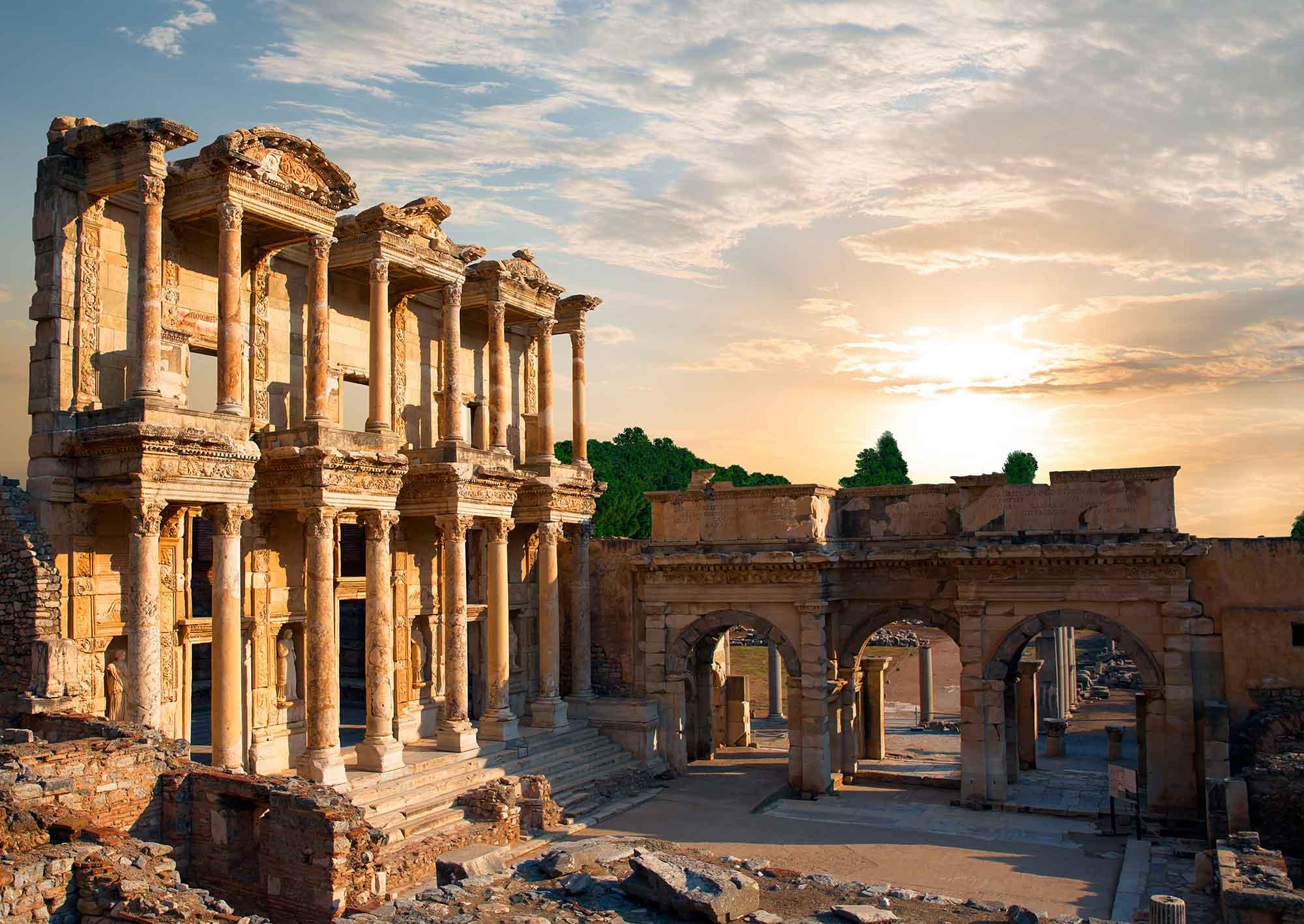
Pamukkale's travertine terraces began forming seventeen thousand years ago, their white calcium shelves spilling down a hillside that today draws more than two million visitors annually. The thermal springs above the plateau maintain a constant thirty-six degrees Celsius, depositing two point four grams of calcium carbonate per litre as the water cools and cascades. Roman engineers recognised the site's therapeutic potential in the second century BCE, founding Hierapolis as a spa city whose bathhouses, theatre, and necropolis now share UNESCO World Heritage status with the travertines below. Ephesus, three hours northwest across the Menderes valley, offers a contrasting tableau of marble urbanism. The Library of Celsus, completed in 135 CE to house twelve thousand scrolls, stands as one of antiquity's best-preserved civic monuments. Its two-storey façade rises sixteen metres, Corinthian columns framing niches that once held statues of the cardinal virtues. The Great Theatre, carved into Mount Pion's western slope, seated twenty-five thousand spectators and hosted gladiatorial contests until the city's harbour silted and trade routes shifted east in the fifth century. Excavations since 1863 have recovered frescoed villas, a terraced agora, and the Temple of Hadrian, its reliefs depicting Medusa, Tyche, and the city's founding myth. Combining both sites in a single departure from Marmaris requires an early start and sustained attention across three hundred kilometres of Aegean highway. Most ephesus and pamukkale tour from marmaris itineraries allocate two hours at Hierapolis and the travertines, then three at Ephesus, with lunch in Selçuk or Pamukkale village. The route traverses the Bozburun peninsula, climbs through pine-covered ridges above Muğla, and descends into the Çürüksu River basin where Pamukkale's white cliffs emerge against scrubland. Guides contextualise the Hellenistic grid planning, Roman bathing culture, and Byzantine church-building that link both locations within a single thread of Anatolian settlement. Practical considerations shape the experience as much as historical weight. Summer temperatures in Denizli province exceed thirty-eight degrees by midday, and the travertines' barefoot-only policy means exposed skin on hot calcite. Winter months bring cooler walking conditions but shorter daylight windows for photography. The conservation fee of thirty euros grants access to both Pamukkale's thermal pools and Hierapolis' archaeological zone, though separate tickets apply at Ephesus. Tour operators from Marmaris handle these logistics as part of full-day packages, leaving visitors free to navigate the marble colonnades and mineral-white pools without queuing at multiple ticket offices.
"The thermal springs deposit two point four grams of calcium carbonate per litre as the water cools and cascades."
A step-by-step walkthrough of the visit — what you'll see, how long each stage takes, and the details that matter.
You leave Marmaris before dawn, the coach winding through Muğla's highland ridges as the first light catches the Aegean below. Three hours later, Pamukkale's travertines appear like a snow slope against the valley's ochre soil. You remove your shoes at the lower entrance—the calcite surface is smooth underfoot, warm where thermal water flows, cooler where it has pooled and hardened. Shallow basins reflect the sky in shades of turquoise and pearl. Above the terraces, Hierapolis spreads across the plateau: a colonnaded street, a theatre facing west toward distant peaks, and the remains of bathhouses where Romans soaked in the same thirty-six-degree springs you wade through now. After lunch in Pamukkale village, the coach continues northwest to Ephesus. The marble street descends steeply between columned façades. You pause at the Library of Celsus, its two-storey front reassembled in the 1970s, Corinthian capitals sharp against the afternoon sun. The Great Theatre's upper tiers offer a view across the silted harbour plain, where cargo ships once moored and goods moved inland. By late afternoon, you return to the coach, retracing the route south. The day's twin itineraries—mineral terraces and marble cities—compress centuries of Roman engineering into a single, sustained encounter with Anatolia's layered past.
The site is open daily from 08:00–18:45. Always aim to visit within the 08:00–10:00 arrival window to beat the heat.
To avoid large tour group crowds and the intense sun, the best arrival window is 08:00–10:00.
Yes, the 30 EUR combined ticket for the Pamukkale travertines and Hierapolis ruins is typically included in your excursion cost.
While you can drive to Pamukkale, most travelers prefer the convenience of an organized ephesus and pamukkale tour from marmaris.
Wear modest clothing for the historical ruins and be prepared to go barefoot on the natural travertine terraces.
Accessibility is limited due to the rugged, natural terrain of the limestone slopes.
Small personal bags are allowed, but keep them light to make walking the terraces easier.
Several cafes are available near the Antique Pool and museum area within the park.
Pack swimwear, a towel, sunglasses, a hat, and comfortable walking shoes for your day out.
Yes, cancellations made at least 24 hours before the tour receive a full refund.